
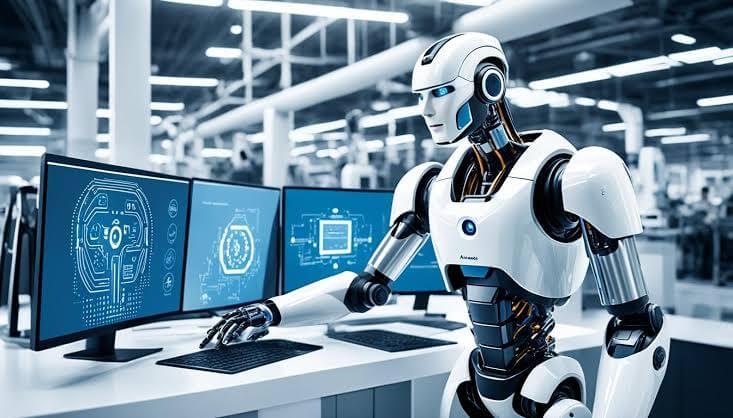
Artificial Intelligence (AI) is no longer a futuristic concept reserved for technology companies and research laboratories. Today, AI is transforming industries across the globe, helping organizations improve efficiency, automate repetitive tasks, enhance customer experiences, and make smarter business decisions. From healthcare and finance to retail and recruitment, AI technologies are becoming essential tools for companies seeking to remain competitive in a rapidly evolving digital landscape.
As businesses increasingly rely on data-driven strategies, AI is enabling them to analyze vast amounts of information, uncover valuable insights, and optimize operations in ways that were previously impossible. This article explores how artificial intelligence is reshaping everyday industries and why organizations must embrace these innovations to thrive in the modern economy.
The Growing Importance of AI in Modern Business
AI refers to computer systems that can perform tasks typically requiring human intelligence, including learning, problem-solving, decision-making, and language processing. Advances in machine learning, natural language processing, and predictive analytics have made AI more accessible and practical for organizations of all sizes.
Companies are leveraging AI to automate workflows, improve productivity, reduce operational costs, and create personalized experiences for customers. As technology continues to advance, AI’s impact on various sectors will only become more significant.
AI in Healthcare
The healthcare industry has experienced remarkable improvements through AI-driven technologies. Medical professionals use AI-powered systems to analyze patient records, identify disease patterns, and support diagnostic processes.
Some key applications include:
- Early detection of diseases through medical imaging analysis.
- Personalized treatment recommendations based on patient data.
- Virtual health assistants that improve patient engagement.
- Predictive analytics for hospital resource management.
These innovations help healthcare providers deliver better patient outcomes while reducing administrative burdens.
AI Revolutionizing Financial Services
Financial institutions are among the earliest adopters of artificial intelligence. Banks, insurance companies, and investment firms use AI to detect fraud, assess risk, and provide personalized financial recommendations.
AI-powered tools can monitor transactions in real time, identifying suspicious activities that may indicate fraudulent behavior. Additionally, investment firms use predictive models to analyze market trends and support portfolio management decisions.
Customer service has also improved significantly through AI chatbots and virtual assistants that provide immediate support and resolve common inquiries efficiently.
Transforming Retail and E-Commerce
Retailers are using AI to better understand customer behavior and create highly personalized shopping experiences. Recommendation engines analyze browsing history, purchase patterns, and customer preferences to suggest relevant products.
Other AI applications in retail include:
- Inventory management optimization.
- Demand forecasting.
- Automated customer support.
- Dynamic pricing strategies.
- Supply chain efficiency improvements.
These capabilities allow businesses to increase sales while improving customer satisfaction and operational performance.
Manufacturing and Smart Automation
Manufacturing companies have embraced AI to improve productivity and reduce downtime. Intelligent systems can monitor equipment performance, predict maintenance needs, and identify defects before products reach consumers.
Benefits include:
- Reduced operational costs.
- Improved product quality.
- Enhanced workplace safety.
- Greater production efficiency.
- Faster decision-making through real-time analytics.
The integration of AI with robotics and industrial automation continues to drive innovation throughout the manufacturing sector.
AI’s Impact on Recruitment and Talent Acquisition
One of the industries experiencing significant transformation is recruitment. Organizations face growing challenges when searching for specialized talent in competitive markets. AI-powered recruitment platforms help employers identify qualified candidates more efficiently while reducing hiring timelines.
Companies seeking expertise in emerging technologies often partner with firms specializing in big data it staffing solutions. These recruitment specialists leverage advanced screening methods and industry knowledge to connect businesses with highly qualified professionals capable of handling complex data-driven projects.
AI tools can evaluate resumes, match candidates to job requirements, and even assist recruiters in identifying passive candidates who may be ideal fits for specific positions. As demand for technology talent continues to rise, AI-driven recruitment strategies are becoming increasingly valuable.
Software Recruitment in the AI Era
The software industry faces constant demand for skilled developers, engineers, and technical specialists. Organizations often struggle to identify candidates with the right combination of technical expertise and cultural fit.
Leading software recruitment agencies are utilizing AI technologies to streamline candidate sourcing, improve hiring accuracy, and enhance overall recruitment efficiency. By analyzing large datasets and candidate profiles, AI systems help recruiters make more informed hiring decisions and reduce time-to-hire.
Additionally, businesses looking to scale their technical teams can benefit from the expertise available through https://devsdata.com, which provides recruitment and staffing solutions tailored to the evolving needs of technology-focused organizations.
AI in Transportation and Logistics
Transportation and logistics companies use AI to optimize routes, reduce fuel consumption, and improve delivery accuracy. Predictive analytics helps organizations anticipate demand fluctuations and allocate resources more effectively.
Applications include:
- Fleet management optimization.
- Real-time traffic analysis.
- Automated warehousing systems.
- Demand forecasting.
- Delivery route planning.
These technologies contribute to faster deliveries, lower operational costs, and improved customer satisfaction.
Education Enhanced by Artificial Intelligence
Educational institutions are increasingly adopting AI-powered tools to personalize learning experiences. Intelligent tutoring systems can adapt lessons based on individual student performance and learning styles.
Benefits include:
- Customized educational content.
- Automated grading and assessments.
- Improved student engagement.
- Enhanced accessibility for remote learners.
- Better performance tracking and analytics.
As digital learning continues to expand, AI will play a crucial role in supporting educators and students alike.
Challenges and Ethical Considerations
Despite its many advantages, AI adoption presents several challenges. Organizations must address concerns related to data privacy, algorithmic bias, transparency, and cybersecurity.
Responsible AI implementation requires:
- Strong data governance policies.
- Ethical development practices.
- Human oversight of automated decisions.
- Compliance with industry regulations.
- Continuous monitoring and improvement.
Businesses that prioritize ethical AI usage will be better positioned to earn customer trust and maintain long-term success.
The Future of AI Across Industries
Artificial intelligence is rapidly becoming a fundamental component of business operations across virtually every sector. As AI technologies continue to evolve, organizations will gain access to even more powerful tools for automation, analytics, and decision-making.
Companies that embrace AI-driven innovation can improve efficiency, enhance customer experiences, and unlock new growth opportunities. Whether through healthcare advancements, smarter financial services, optimized supply chains, or more effective recruitment strategies, AI is reshaping everyday industries in profound ways.
Read also Beginner’s Guide to Crypto Investing (Step-by-Step)